
Glaucoma is a group of eye diseases that can slowly damage the optic nerve in the eye, often leading to vision loss and even blindness if untreated. This damage is usually caused by high pressure inside the eye, known as Intraocular Pressure (IOP).
The eye’s pressure is controlled by a fluid called aqueous humor, which is produced inside the eye. If this fluid doesn’t drain properly or if too much is produced, the pressure rises. Over time, this increased pressure damages the optic nerve, which is responsible for vision.

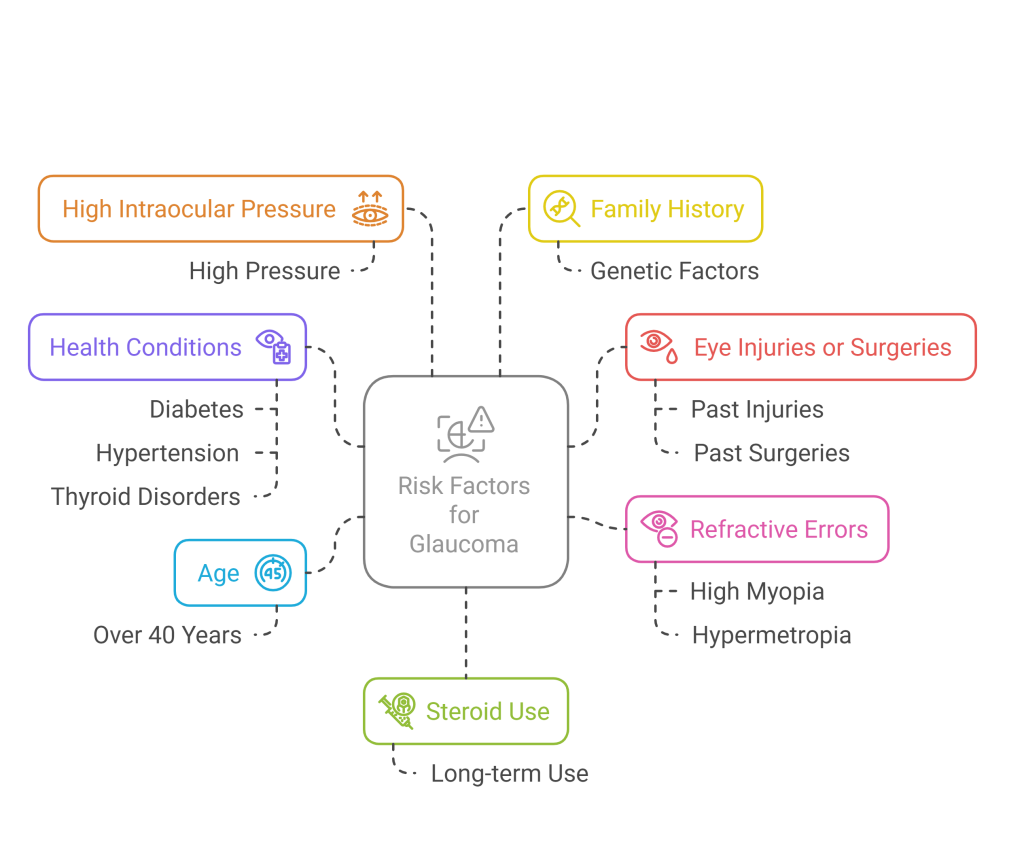
Glaucoma is a serious eye condition that can develop due to several risk factors. Age is one of the most significant factors, with people over the age of 40 being at a higher risk. If you have a family history of glaucoma, your chances of developing the disease are also increased, making it important for family members to get checked regularly. Other health conditions, like diabetes, high blood pressure, and thyroid disorders, can impact eye health and increase the risk of glaucoma. In addition, eye injuries or surgeries, as well as the long-term use of steroids, can contribute to higher eye pressure, which is a leading cause of glaucoma. People with certain refractive errors, such as high myopia (nearsightedness) or hypermetropia (farsightedness), are also at an elevated risk for specific types of glaucoma.
Detecting glaucoma early is essential to prevent vision loss, as many types of glaucoma have no noticeable symptoms in the early stages. To identify the disease, a series of tests are conducted by eye specialists. These tests help measure eye pressure, assess the optic nerve’s health, and check for any loss of peripheral vision. Visual acuity tests and tonometry are commonly used to assess vision and intraocular pressure. Other advanced techniques like gonioscopy and OCT (Optical Coherence Tomography) allow doctors to view the drainage angle of the eye and the thickness of the retinal nerve fiber, which can indicate early signs of glaucoma. A dilated eye examination gives a clear view of the optic nerve to check for any damage. Regular eye exams, even in the absence of symptoms, are crucial for early detection and treatment of glaucoma.

There is no medicine or eye drops to cure cataract. The only treatment is cataract surgery, where the cloudy lens is removed and replaced with a clear artificial lens (called an Intraocular Lens or IOL).
At Kiran Eye Hospital, we offer:
These reduce fluid production or help fluid drain better, lowering eye pressure.
Used to treat certain types of glaucoma by improving fluid drainage.
Procedures like Trabeculectomy or Glaucoma Drainage Devices are used in more advanced cases.
Glaucoma cannot be completely cured, but with the right treatment, its progression can be controlled. Regular check-ups and appropriate treatment can preserve vision.
Everyone over 40 should have regular eye exams to check for glaucoma, even if you don’t have symptoms.
No, glaucoma is not infectious, but it can be genetic. If anyone in your family has had glaucoma, other family members should also get checked.
Primary Open-Angle Glaucoma (POAG): Usually doesn’t show symptoms until significant vision loss occurs. Early signs may include a gradual loss of peripheral vision.
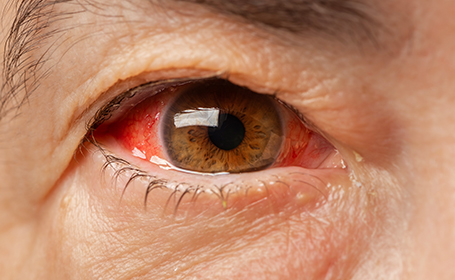
Primary Angle-Closure Glaucoma (PACG): Can cause blurred vision, halos around lights, eye pain, redness, and nausea.
Primary Open-Angle Glaucoma (POAG): Slowly progresses with little to no symptoms until vision loss occurs.
Angle-Closure Glaucoma (ACG): Caused by a sudden increase in eye pressure, leading to intense symptoms such as eye pain, nausea, and vomiting.
Congenital Glaucoma: Present at birth, it requires early treatment.
Secondary Glaucoma: Develops as a result of another condition like eye injury, surgery, or diseases such as diabetes.
If you have been diagnosed with glaucoma, it’s important to follow your doctor’s treatment plan and attend regular eye check-ups. Early treatment can help prevent vision loss.
Yes, Kiran Eye Hospital is partnered with several insurance companies, and you can claim insurance for glaucoma treatment. For more details, contact our team.
We are a leading center for advanced eye care in Birgunj, Nepal. We are dedicated to providing world-class ophthalmic services with cutting-edge technology, compassionate care, and a team of highly experienced specialists.
Sunday – Friday
09 : 00 AM – 05 : 00 PM