
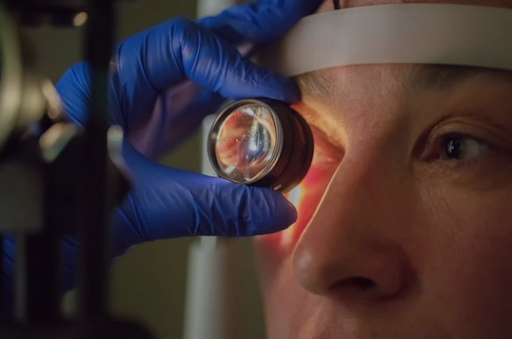
The retina is the light-sensitive tissue at the back of the eye. It contains two types of photoreceptors:
Rods, which help detect motion and provide black and white vision.
Cones, which are responsible for color vision and perform best in bright light.
Any damage or disease to the retina can cause vision problems, including blurry vision, loss of central vision, or even blindness.
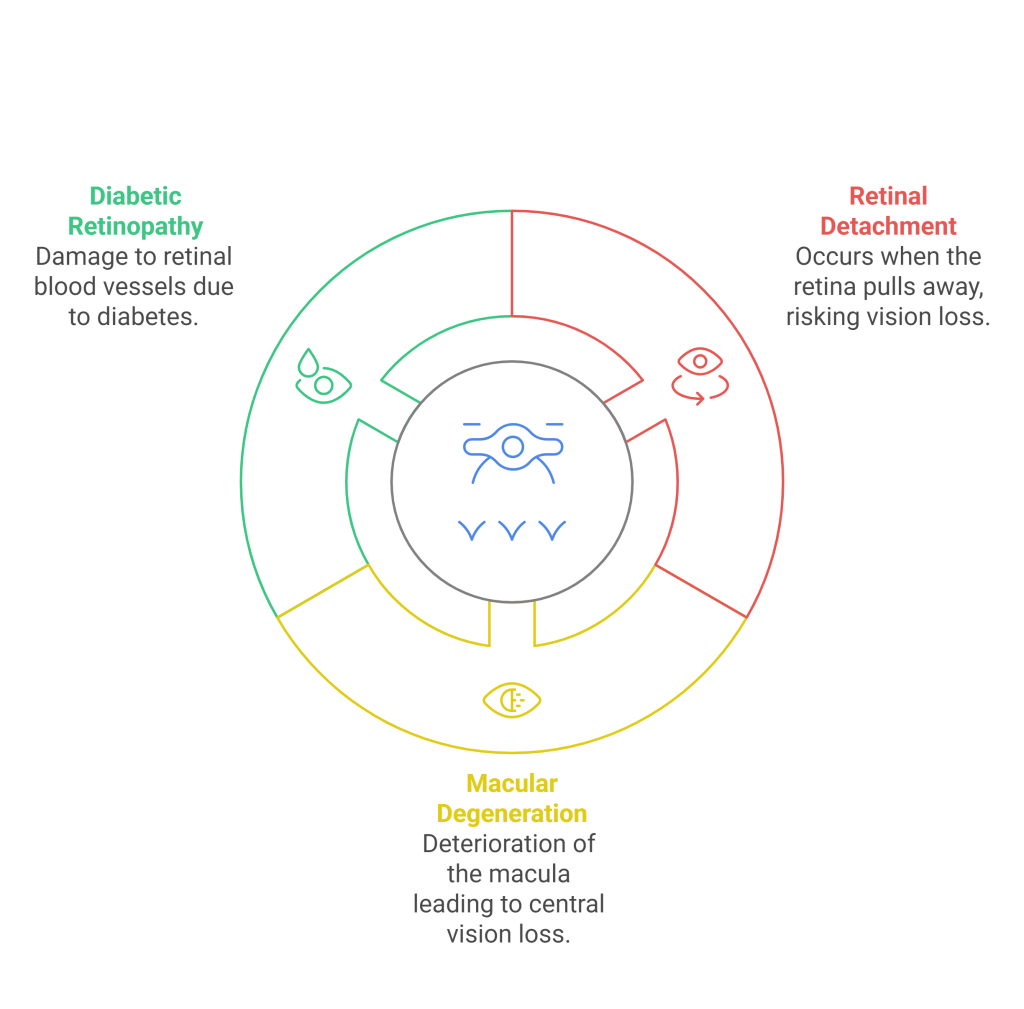
Vision loss is often caused by conditions such as:
Diabetic Macular Edema: Leaky blood vessels cause fluid buildup in the retina, leading to swelling and vision loss.
Proliferative Diabetic Retinopathy (PDR): Abnormal blood vessels grow and bleed into the vitreous, causing significant vision loss.
Common symptoms include:
Blurred vision
Flashes of light
Floaters (small moving spots in your vision)
Distorted images
Loss of central vision
Control diabetes: Keep blood sugar levels in check to avoid diabetic retinopathy.
Quit smoking: Smoking increases the risk of macular degeneration.
Regular eye check-ups: Especially if you have diabetes or a family history of eye disease.
Diabetic retinopathy occurs when high blood sugar levels damage the tiny blood vessels in the retina, leading to vision loss. Early stages might not show symptoms, so regular eye exams are crucial for early detection and treatment.
Yes, if left untreated, conditions like retinal detachment, macular degeneration, and diabetic retinopathy can cause severe vision loss or blindness.
A vitrectomy is a surgical procedure to remove the vitreous gel from the eye and repair the retina. It is used to treat conditions like retinal detachment or macular degeneration.
We are a leading center for advanced eye care in Birgunj, Nepal. We are dedicated to providing world-class ophthalmic services with cutting-edge technology, compassionate care, and a team of highly experienced specialists.
Sunday – Friday
09 : 00 AM – 05 : 00 PM