
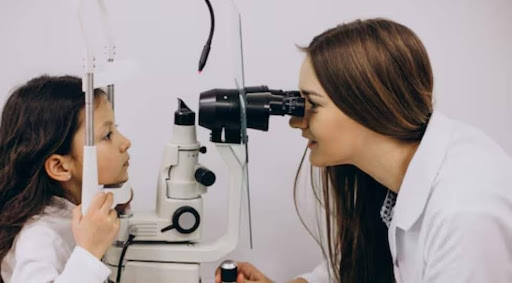
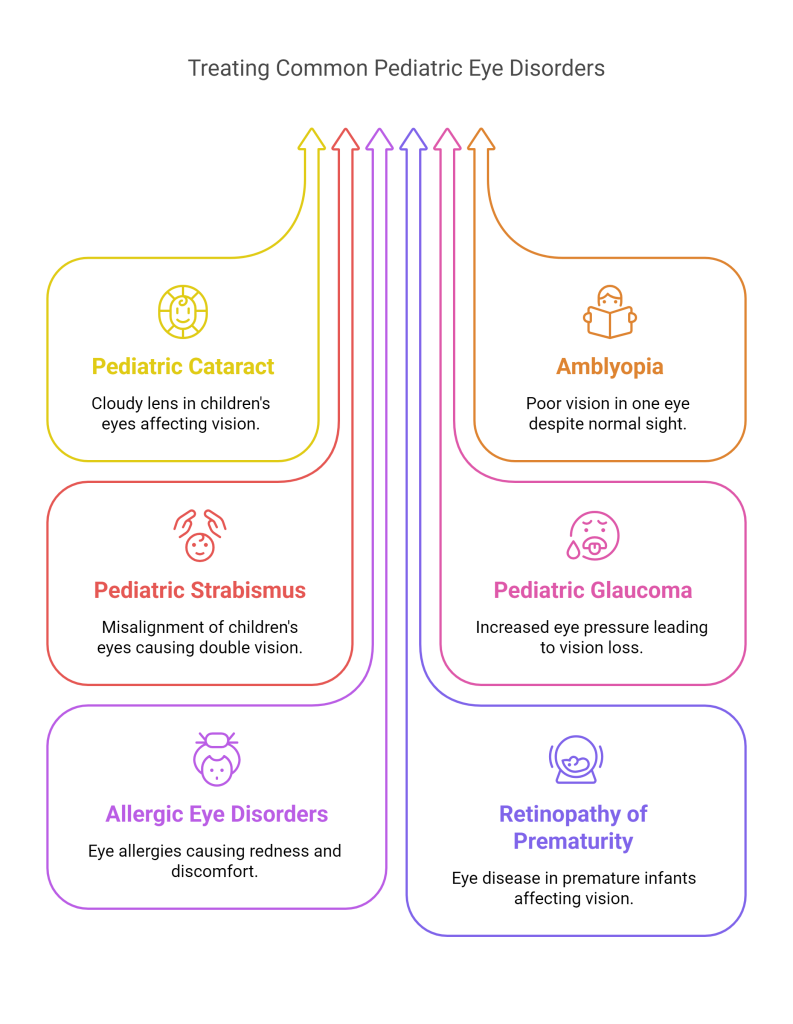
Pediatric ophthalmology focuses on diagnosing and treating eye diseases and vision issues in children. Our team provides comprehensive eye care, from diagnosing and treating squint (misalignment of the eyes) to managing pediatric cataracts, amblyopia (lazy eye), and other childhood vision problems.
We offer a range of specialized services for children, including:


Strabismus, also known as squint, is when the eyes are misaligned and do not look in the same direction. It can occur in both children and adults.
The types include:
Esotropia (eyes turn inward)
Exotropia (eyes turn outward)
Hypertropia (eyes turn upward)
Hypotropia (eyes turn downward)
Yes, if left untreated, the brain may ignore the image from the misaligned eye, leading to poor visual development. This condition is known as Strabismic Amblyopia or lazy eye.
Treatment includes:
Glasses or prisms
Eye exercises to improve coordination
Surgery to align the eyes if necessary
Amblyopia is a condition where one eye does not develop proper vision, often due to uncorrected strabismus. The brain ignores the image from the weaker eye.
Amblyopia happens when the brain prefers the image from the stronger eye and ignores the blurred image from the weaker eye, leading to poor vision in the “lazy” eye.
How is amblyopia treated? The treatment for amblyopia typically involves:
Corrective glasses
Patching the stronger eye to force the brain to focus on the weaker eye
Atropine eye drops as an alternative to patching
A cataract is when the eye’s natural lens becomes cloudy, impairing vision. In children, early treatment is crucial to prevent long-term vision problems.
Cataract surgery may need to be performed as early as 3 months of age if the cataract is affecting the child’s vision.
Yes, after cataract surgery, children will need glasses and may require patching to ensure proper visual development. Failure to follow aftercare instructions may lead to Visual Deprivation Amblyopia.
Yes, adult strabismus can be treated using the same methods as pediatric strabismus, including glasses, eye exercises, and surgery.
Temporary issues like double vision, red eye, or discomfort may occur post-surgery. Serious complications are rare.
In most cases, strabismus surgery successfully aligns the eyes. However, partial alignment may require additional surgery.
While strabismus surgery improves the appearance, it may also enhance binocular vision and expand the visual field, improving both functional and aesthetic outcomes.
We are a leading center for advanced eye care in Birgunj, Nepal. We are dedicated to providing world-class ophthalmic services with cutting-edge technology, compassionate care, and a team of highly experienced specialists.
Sunday – Friday
09 : 00 AM – 05 : 00 PM